Wednesday, April 24, 2013

Guest Blog Post: School Lunches

This week, my blog will be featuring a post from Cordelia Brand, check out her blog here.

During the school day, even lunch time is an important learning experience. What kids are served or able to buy is influential to student’s perceptions of nutrition. Lunchtime is the only education about nutrition many kids receive until they take an official health class in middle school. While formal nutrition classes aren’t crucial in kindergarten and into grade school, healthy school lunches make a large impact on how children view nutrition.

There are ongoing debates about the health of U.S. school lunches. Schools have to work within a budget, and when budgets are slashed, schools see food programs as an area to cut costs. Mass-produced frozen food is easier to prepare and cheaper for schools to provide, but are often much more unhealthy than fresh and natural food.

When schools serve kids frozen pizza, a can of pop, tinned fruit in syrup, and french fries, kids get the impression that this food is normal. When served these high-fat, high-sugar, low-nutrient dense foods regularly, there are negative impacts on physical and mental health. Not only do kids view these meals as normal and expected, their tastes mold to prefer these foods over healthier ones. Many studies have shown that poor nutrition negatively affects concentration, energy, and motivation. This can in turn lower test scores and happiness, along with increase unhealthy weight.

The U.S. can learn from Japan’s school lunch program. When students bring lunches from home (mostly in junior and high schools), bentos are standard lunch fare for all ages, especially children. Many elementary schools have school lunch programs that serve bento-style foods. They aren’t packed neatly into boxes, rather have smaller portions of a variety of foods. A certified nutritionist plans balanced meals, and food is often local and rarely frozen. Students help out with lunch by taking turns serving food and cleaning up. This gives a sense of responsibility to kids and teaches them different ways to serve a balanced meal. Like in America (although much less so), the meals aren’t perfectly healthy. There is often fried food and always whole milk, but smaller portions of these treats teach kids not to overindulge.

Bento vs. Typical American Lunch
 

Unsurprisingly, Japanese students are among the highest performing in the world. They also have a much lower obesity rate than American children. By comparing the two country’s school lunch programs, this should not come as a surprise. America can learn from Japan’s school lunch culture to teach children about nutrition with healthy, balanced lunches from the start of school.

Tuesday, April 2, 2013

East vs. West: The Medicinal Victor

I recently suffered from a terrible bout of Mono. For days I laid in bed sleeping anywhere from 12 to 19 hours a day. A week went by and there was no improvement. Two weeks went by and I was actually starting to feel worse as my lymph nodes swelled to the size of golf balls and my throat was so inflamed that my doctor had to prescribe me steroids. After 10 days of taking steroids and antibiotics and seeing no improvement whatsoever, I decided to abandon Western medicine and try out what I had previously been reluctant to do in the practices of Eastern medicine.

My mom knows a woman who spent several years traveling through China, India and the rest of Southeast Asia learning the ways of ancient medicine. At first, I was reluctant to try her strange methods of healing because I thought that Western medicine was the best, and frankly, the only proper way to treat a malady. But I pushed my reservations aside and went to her house where I was immediately taken to a room which looked a lot like a spa, with a massage table and various bottles filled with foreign creams. It didn't look anything like a doctor's office, more like a yoga studio. She told me to lay down on the massage table and relax. Then suddenly she began sticking me with tiny needles. I hate needles, probably more than anything else, but I instantly felt relief as she carefully inserted each needle. Then she handed me tiny glass vials filled with a special salt water solution that was meant to help bring down the swelling in my lymph nodes. Three days and 21 salt water vials later, and I could finally swallow without ay pain in my throat. She also handed me packets of herbal teas with special medicinal properties that reduced my fevers and helped me sleep through the night.

In three weeks' time, I was feeling back to my normal self again. I never in a million years thought that ancient Chinese or Indian medicine would be able to cure an illness that had no known cure. To me, East triumphed over West. And who knows, maybe I'll try out yoga next.

Monday, April 1, 2013

The Right to Fight for Your Life

For many decades, women have been fighting for their rights. In America and around the world, women have been fighting for the chance to vote, be seen as equals in the eyes of men, and work the same jobs for the exact same pay as their male counterparts. When it comes to health, women have worked tirelessly to raise awareness about and promote the well-being of females. However, in many regions of the developing world, women face even more rudimentary problems that can drastically affect their health such as poverty and discrimination. Because so many cultures/societies value men over women, female infanticide, inadequate food and medical care, physical abuse, genital mutilation, forced sex, and early childbirth are just some of the many factors that affect the health of women and can even result in their death. Many of these issues could be solved or prevented if women around the world were given equal opportunities.

In recent years, the major issues with women's rights in terms of health have been centered around the use of contraceptives and the legalization of abortion. For many developing nations, sexually transmitted diseases (such as HIV/AIDS) have lead to the deaths of millions of women. In many cases, these diseases could be prevented if birth control and other forms of contraceptives were more readily available. In Africa, one in 26 women will die of a maternity-related cause. This statistic is shocking and unacceptable.

Another major issue that has been one of the central legal battles of the 21st century is the ethical debate over abortion. In the United States, the court case Roe vs. Wade nullified abortion laws in all 50 states. And while abortion is still legally practiced in a few states, it is performed mostly in secrecy, with consequences severe enough for the medical professional to lose their right to practice or even send them  to prison. But the campaign to make abortion illegal everywhere only further undermines the rights of women. If women cannot choose how to take care of their own bodies or are prevented from making certain medical decisions because of the law, then the politicians need a serious make-over.

Every human being deserves to live a healthy and fulfilling life. Women, no matter how cultural, social, or religious barriers prevent/undermine them, should not be the exception.

Tuesday, February 12, 2013

The Madness of Being Mad

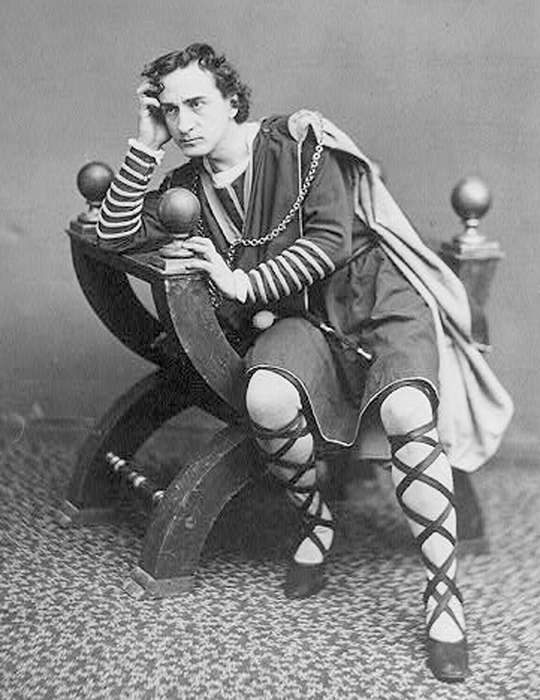
The perception of the world can change dramatically over the course of a few hundred years. Take, for example, today's views on mental health versus they way people might have viewed mental disorders in the 16th century. An interesting examination of the play Hamlet by William Shakespeare shows that the title character is portrayed as mentally ill for reasons very different from our modern definition. As Prince of Denmark, Hamlet would be viewed as royalty; one who dresses in the finest fashion, dines on the best delicacies, and sleeps in the most comfortable bed. However, when Hamlet arrives in the royal court appearing disheveled, he is instantly thought to be mad. In Shakespeare's time, it was believed that a person was crazy if he/she behaved like a fool, dressed poorly, and/or was unclean. As Hamlet's love interest Ophelia describes his appearance, he had "his doublet all unbraced,/no hat upon his head, his stockings fouled,/ ungartered, and down-gyved to his ankle," (2.1.88-90). Anyone not conforming to societal normalcy in Shakespeare's time was considered to be mentally ill.

Nowadays, acting against the societal status-quo is rarely defines a person as crazy or mad. The number of people diagnosed with mental illnesses in today's society far exceeds the number of affected people in any other time period. The prevalence of mental illness is probably what makes people with mental disorders more accepted in our society today. Rather than being defined by their appearance, like in Hamlet, mentally ill people are more likely to be labeled by their behavior and personal interactions with others. However, in the last few decades, we have aggressively spread our modern knowledge of mental illness around the world, believing that our approaches reveal the biological basis of psychological suffering and nullify myths and harmful stigma. Mental disorders such as depression, PTSD, and anorexia are fairly common illnesses that affect millions of people all over the world. And now with world-wide media coverage, awareness of mental illness is spreading across the globe through campaigns, fundraisers, and news sources. These methods of communication have helped break the stigmas that accompany many mental disorders. Modern medicine has helped create cures for some disorders and has been able to control the symptoms of many more. Our world is constantly changing, and with it, our views.


Bold words:
doublet: a close-fitting jacket  
unbraced: unfastened
fouled: dirty
down-gyved to his ankle: fallen down around his ankles like gyves or chains

Tuesday, January 29, 2013

Partying to Death?

While the new year has only just begun, there has already been tragedy sweeping the planet. In recent news, a fire that broke out at the Kiss nightclub in Santa Maria, Brazil left an estimated 232 people dead and hundreds more injured. The fire began when pyrotechnics from a band playing at the club ignited the foam insulation on the ceiling. In a matter of minutes, smoldering embers began falling onto club-goers, and soon after, the fire spread rapidly throughout the club. The club's maximum occupancy was 1,000 people, but there were more than 2,000 people in the club that night. To make matters worse, the club had only one exit. As the fire spread, thousands of Brazilians began chaotically searching for the exit. Many people died as a result of being trampled, which left them trapped inside the burning building. Countless others perished from asphyxiation or being crushed by falling debris.

Valderci Oliviera, a Brazilian lawmaker, said the aftermath "looked like a war zone." A police inspector, Sandro Meinerz, recalled "it was like one of those films of the Holocaust." It is a little extreme to compare a nightclub fire to a war or the Holocaust, events in which millions of lives were lost at the hand of violence. The connotations associated with something such as the Holocaust bring out feelings of hatred and disgust. While the site of the fire was certainly grotesque and heartbreaking, millions of people were not being intentionally murdered. Therefore, I think it is inappropriate to compare the night club incident to something as heart-wrenching as the Holocaust. However, the event was tragic to say the least.

 The deadly fire in Santa Maria was just one of many night club fires that have occurred in the previous decade. A fire that broke out at a club in Rhode Island in 2003 left hundreds dead and even more wounded. This disturbing trend needs to be stopped. In my opinion, certain measures need to be taken in order to protect the health and safety of club-goers. Firstly, all clubs should have more than one entry/exit in case of an emergency, so that there is sufficient room to get everyone out of the building. Second, pyrotechnics should be banned or strictly monitored so there is less risk of fire. Finally, clubs should not be allowed to exceed maximum capacity. In order to regulate this, rules should be implemented stating that only X number of people are allowed into the club at any one time. Occupancy regulations would prevent overcrowding in the event of an emergency.

If you ever go to a club, the first thing you should do is to make sure you know where the exits are. Knowing that could be the difference between life and death.